Description
BJT Transistor Experimentation Board
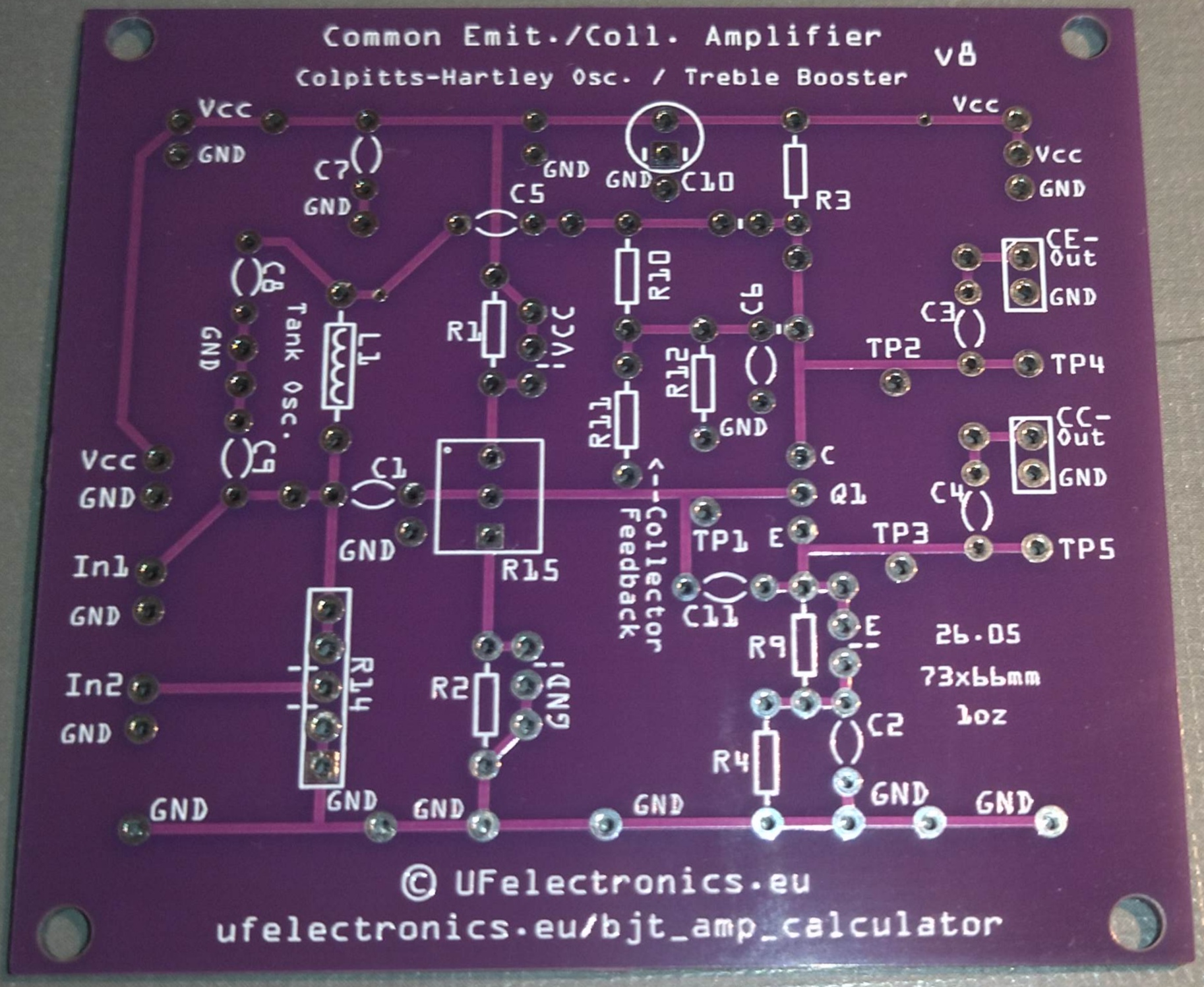
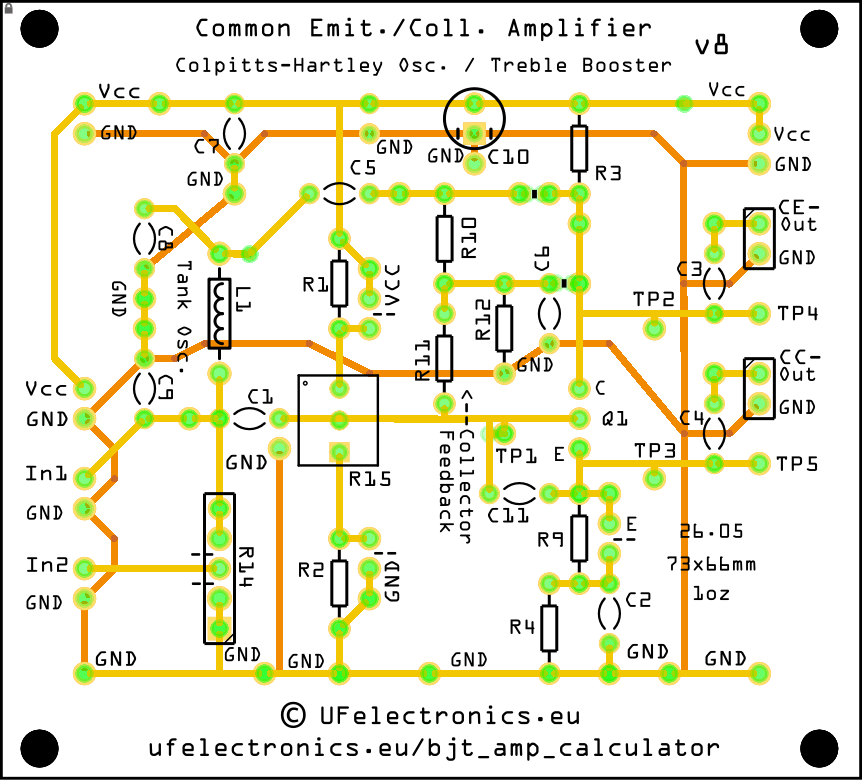
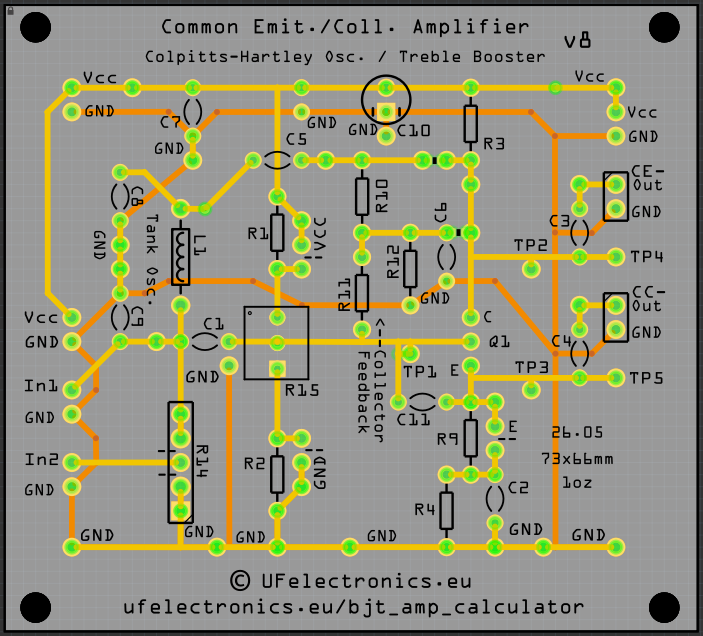
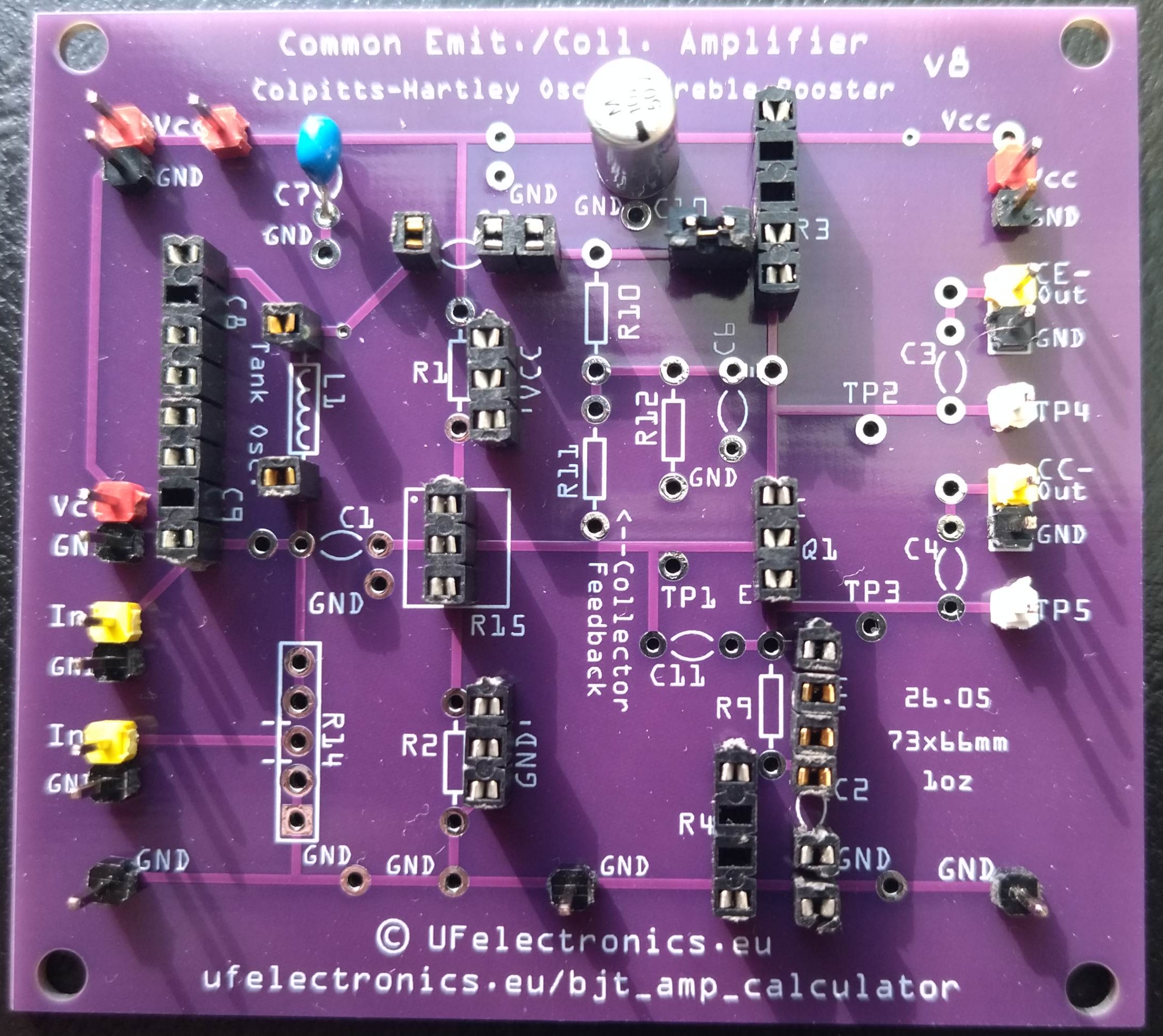
This board is designed for experimenting with NPN transistor–based amplifier and oscillator circuits without designing a new PCB for every project.
Suitable for:
- Students
- Hobbyists
- Makers
- Educational labs
- Analog electronics enthusiasts
Supported Circuit Types
- Common Emitter amplifiers
- Common Collector amplifiers
- Colpitts oscillators
- Hartley oscillators
- Treble boosters
- Multi-stage transistor amplifiers
- Signal buffering stages
- Small-signal analog experiments
Key Features
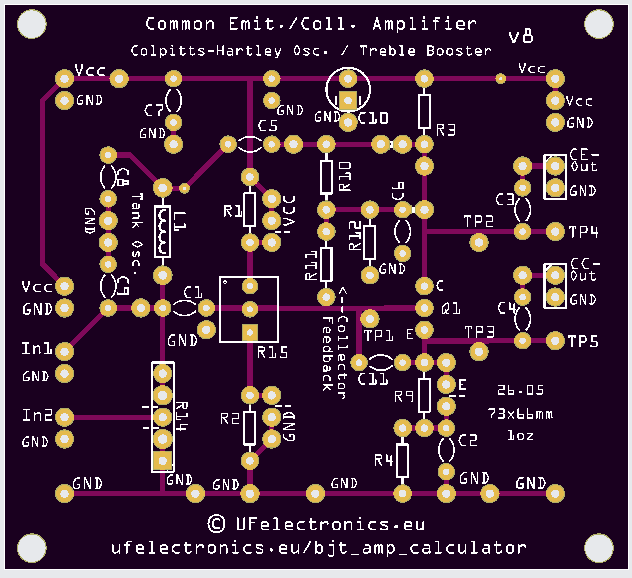
Semi-Schematic PCB Layout
=> The board visually follows the signal flow of the circuit, helping users relate schematics to their physical implementation.
Through-Hole Design
=> Easy to solder, modify, debug, and reuse.
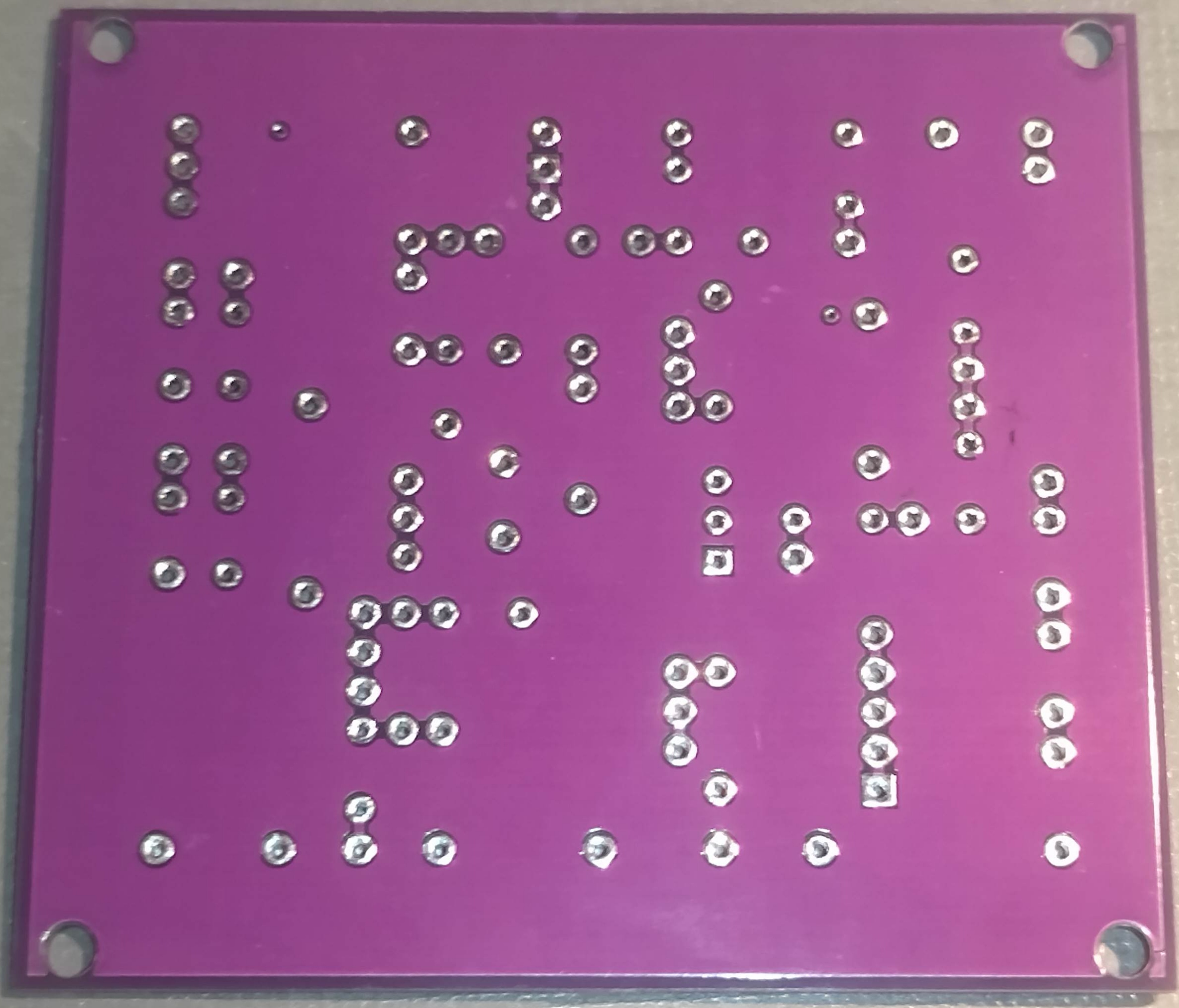
Full Backside Ground Plane
=> Improves grounding and reduces noise.
Adjustable Biasing Support
=> Variable resistor footprints simplify transistor bias adjustment during experimentation.
Multi-Footprint Support
=> Supports multiple component sizes and footprints for greater flexibility.
Spacious Layout
=> Extra spacing between components improves probing, soldering, and debugging.
Educational Value
- Transistor biasing
- Voltage and current gain
- Phase inversion
- AC coupling
- Feedback systems
- Oscillator design
- Analog debugging techniques
Board Specifications
- PCB Size: 73 mm × 66 mm
- PCB Thickness: 1.6 mm
- Copper Weight: 1 oz
- Through-hole construction
- Full backside ground plane
PDF with Description
Suggestions?
Why start with simple amplifiers?
A single-transistor amplifier may seem simple, and it is. But that simplicity is also its greatest strength as a learning tool.
When you build, tweak, and measure these circuits yourself, you quickly discover the gap between theoretical calculations and practical reality. Biasing is rarely perfect, gain is limited, and small changes can have large effects.
This hands-on experience builds the intuition that every analog designer needs.
As these limitations become clear, the motivation to move toward more advanced circuit topologies naturally arises. In that context, the differential amplifier stands out as a powerful next step, offering significantly improved stability, linearity, and control.
This board is therefore not just a tool for learning how transistor amplifiers work, but for understanding why more advanced designs are needed.
It is through these limitations that real understanding begins.