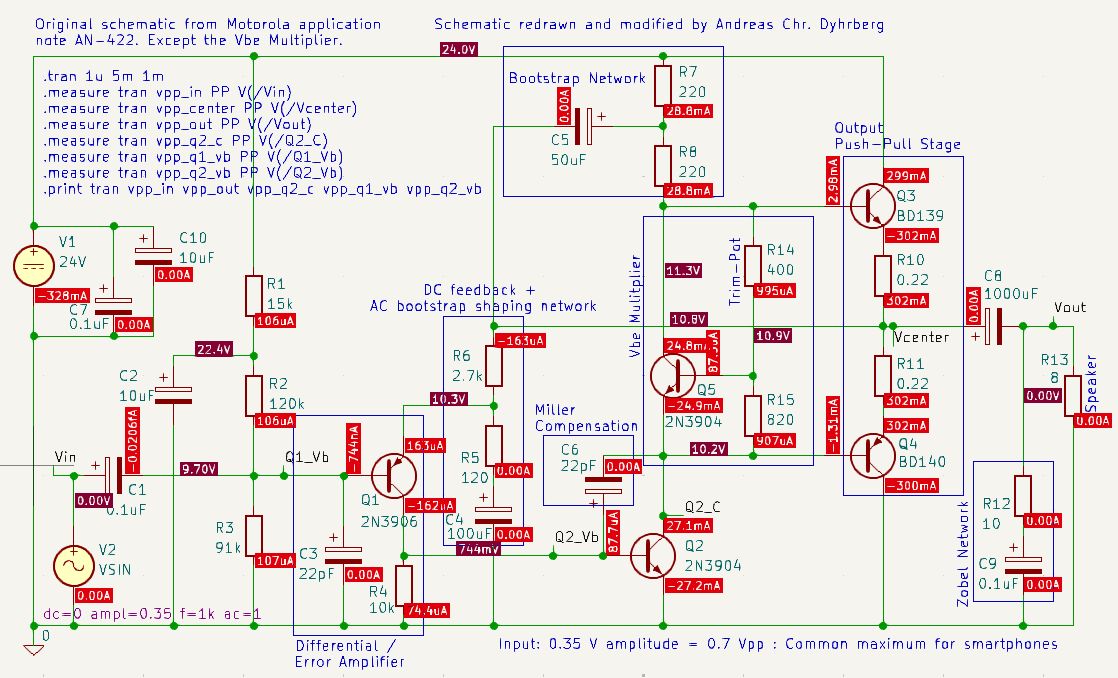
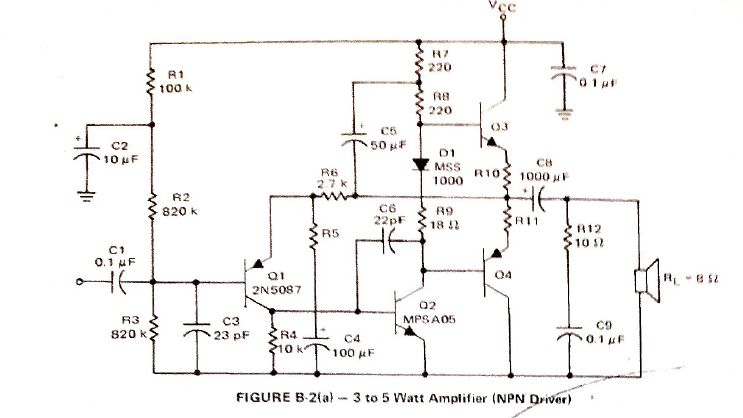
I’ve been digging into a classic Motorola Class-AB amplifier and collected a clear, structured explanation of how each functional block works – feedback, bootstrapping, biasing, stability – all built from basic BJTs.
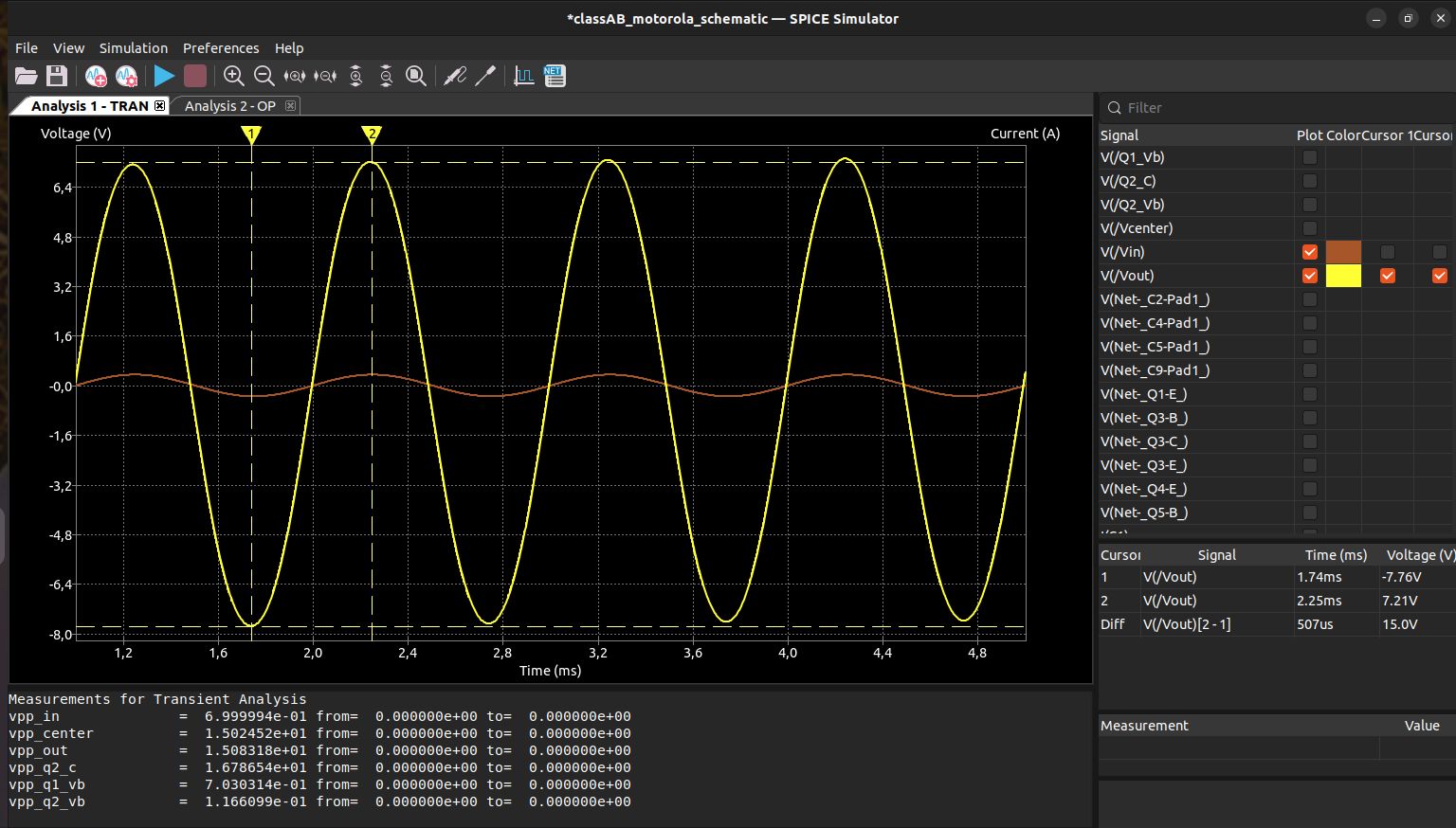
To make it hands-on, I also recreated the full circuit in KiCad so you can simulate it yourself and see how much elegance and performance careful topology can extract from simple parts.
Both the PDF and the KiCad files are available on GitHub:
https://github.com/ufelectronics/classab-based-on-motorola-an-422
Motorola’s amplifier designs showed that clever architecture beats exotic devices – achieving low distortion, stability, and robustness with nothing more than thoughtful circuit design.
Thanks for taking a look into the fascinating past of discrete transistor amplifiers.