
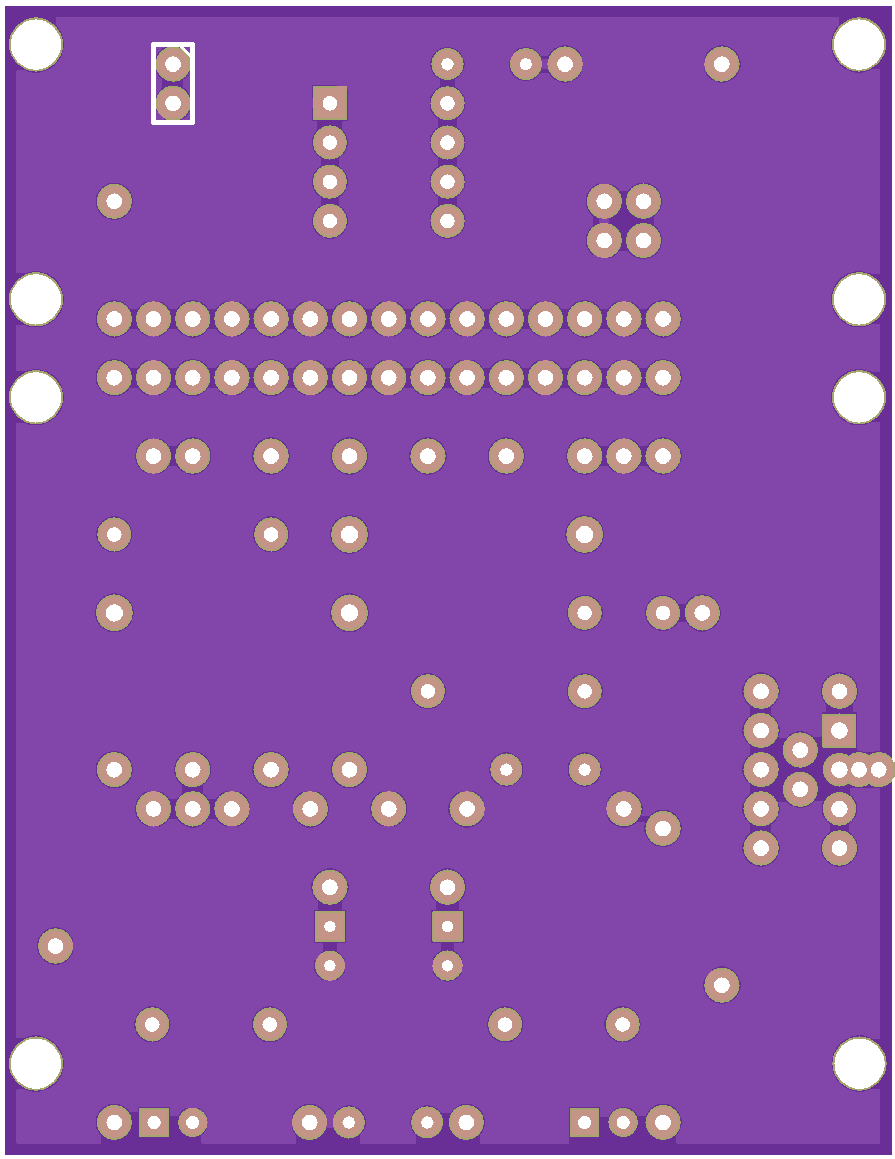
Description
Learn, prototype and build permanent 555 timer circuits.
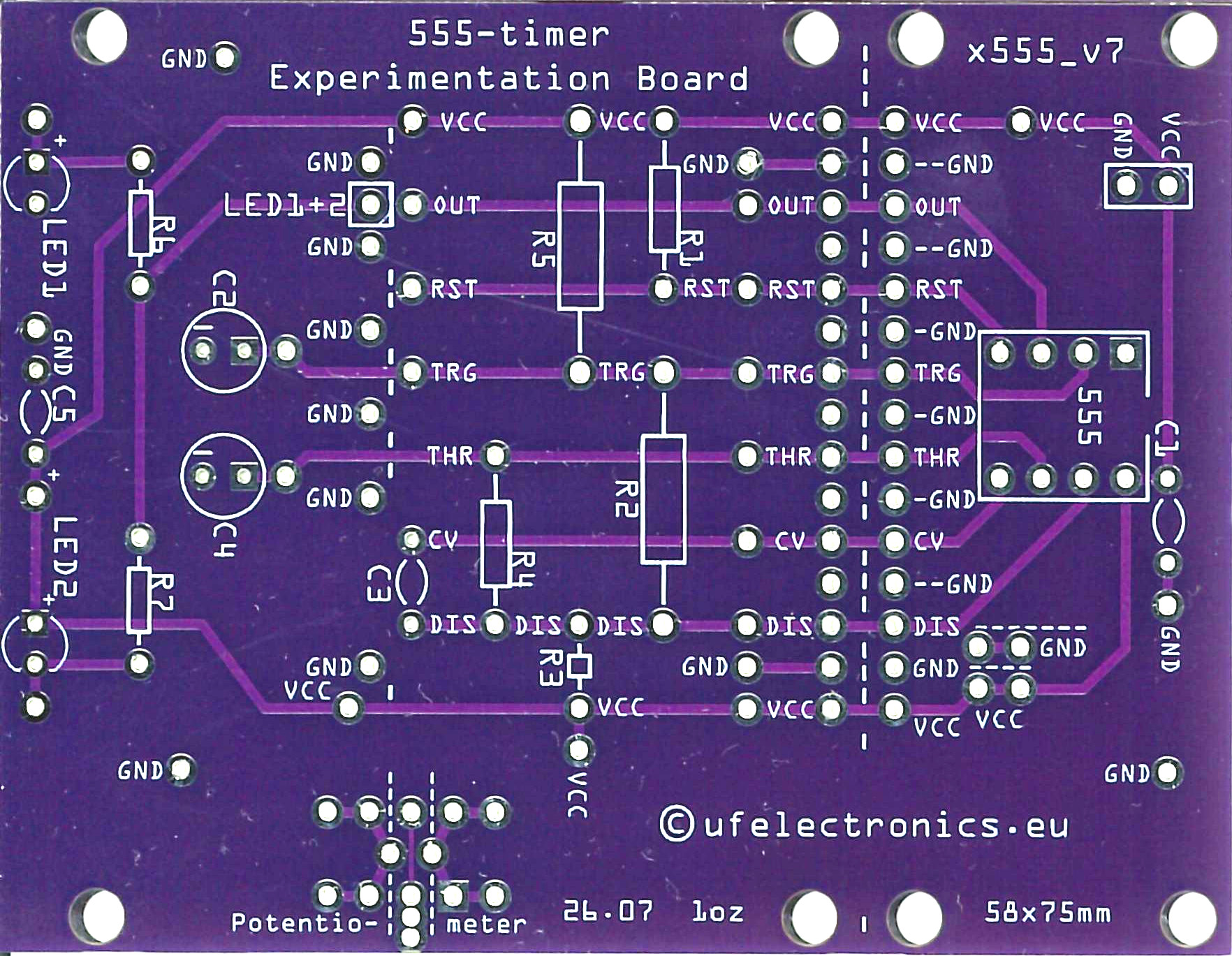
The 555 Timer Experimentation Board is a flexible prototyping PCB designed for students, hobbyists, makers and engineers who want to explore everything the classic 555 timer IC can do.
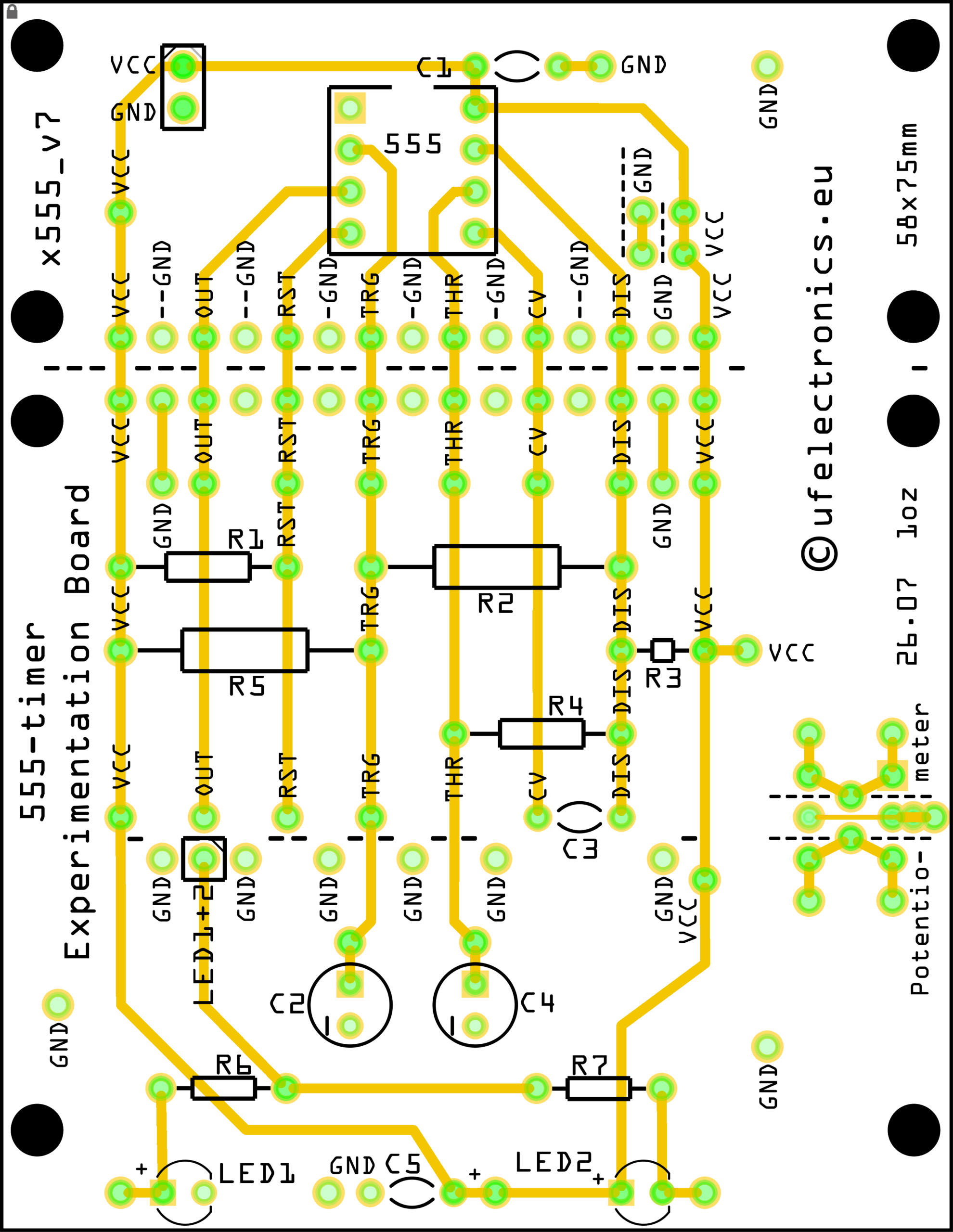
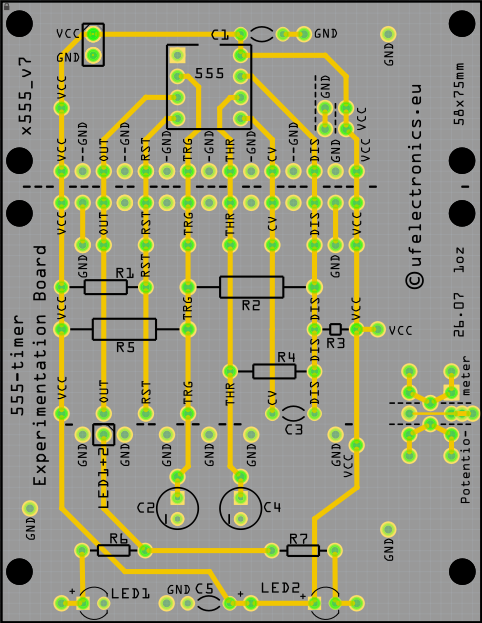
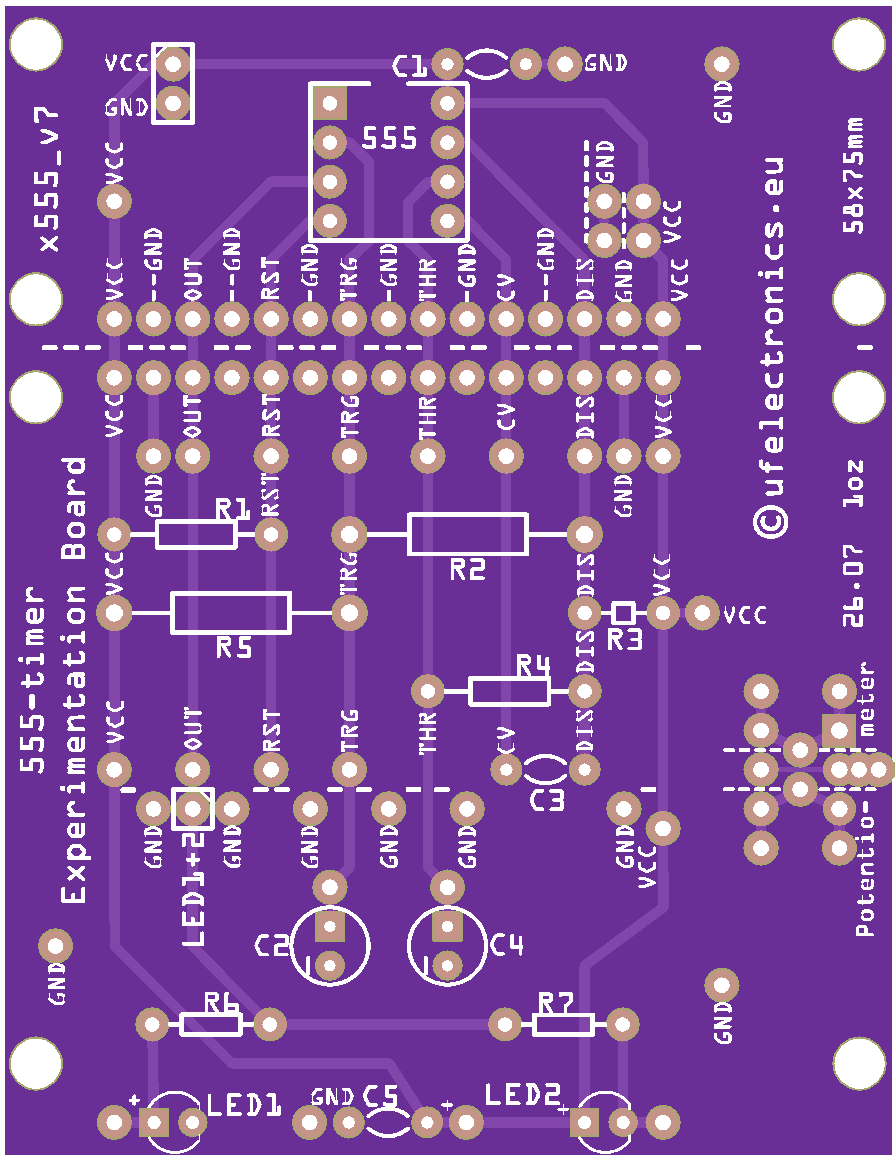
Instead of forcing you into a predefined circuit, every pin of the 555 is routed to its own long connection rail, giving plenty of room for building, modifying and comparing different circuit topologies.
Ground rails are placed between the signal rails, providing additional component mounting space while helping reduce unwanted coupling between adjacent signals.
Once a circuit has been perfected, the board can either become the permanent circuit itself or be separated into two individual boards for breadboard integration.
Whether you’re learning electronics or developing a real project, the board encourages experimentation instead of limitations.
Features
- Every 555 pin brought out to long prototyping rails
- Ground rail between every signal rail
- Plenty of room for through-hole components
- Dedicated footprints for common timing components
- Two indicator LEDs
- Potentiometer footprint for adjustable timing
- Optional power filtering capacitor
- Board can be cut into two separate sections
- Breadboard-friendly design
- Suitable for permanent stripboard-style projects
- Standard through-hole components only
- Ideal for education and laboratory work
Included Footprints
The board provides footprints for:
- NE555 / LM555 (DIP-8)
- 7 resistors (R1–R7)
- 5 capacitors (C1–C5)
- 2 LEDs
- Potentiometer
- Multiple VCC and GND connection points
What Can You Build?
The board is suitable for experimenting with virtually every classic 555 application.
Timing Circuits
- Monostable timer
- Astable oscillator
- Bistable latch
- Missing pulse detector
- One-shot pulse generator
- Power-on reset timer
- Delayed turn-on
- Delayed turn-off
- Watchdog timer
Oscillators
- Square-wave oscillator
- Variable frequency oscillator
- Low-frequency oscillator
- Audio oscillator
- Tone generator
- Clock generator
- Pulse generator
PWM Circuits
- PWM generator
- LED dimmer
- DC motor speed controller
- Servo pulse generator
- Power control experiments
LED Projects
- LED flasher
- Alternating LEDs
- Pulse LED
- Fade experiments
- Strobe light
- Adjustable blink rate
- Running light driver (with external circuitry)
Audio Projects
- Electronic beeper
- Alarm
- Siren
- Doorbell
- Metronome
- Morse code practice oscillator
- Sound effects
Measurement Projects
- Frequency generator
- Clock source
- Pulse stretcher
- Frequency divider (with external logic)
- Duty cycle experiments
Sensor Applications
Using external components, the 555 can react to:
- LDRs (light sensors)
- Thermistors
- NTC/PTC sensors
- Phototransistors
- Hall sensors
- Reed switches
- Push buttons
- Tilt switches
- Capacitive touch sensors
- Moisture sensors
Practical Projects
- Time-delay relay
- Battery saver
- Fan timer
- Staircase light timer
- Automatic shut-off
- Lamp flasher
- Toy sound generator
- Traffic light experiments
- Railway crossing flasher
- Pulse-controlled relay
Educational Experiments
The board is especially suitable for learning:
- RC charging and discharging
- Exponential capacitor curves
- Comparator operation
- Schmitt trigger behaviour
- Flip-flops
- Pulse width modulation
- Frequency vs. capacitance
- Frequency vs. resistance
- Duty cycle adjustment
- Trigger and threshold operation
- Reset functionality
- Control voltage pin experiments
- Output drive capability
- Decoupling techniques
Breadboard Integration
A unique feature of the board is the ability to separate it into two individual sections.
After cutting along the marked line, the 555 section can be fitted with pin headers and plugged directly into a breadboard. This allows the IC to remain on a compact breakout while all surrounding circuitry is developed on the breadboard.
Once the circuit has been verified, the components can easily be transferred back onto the experimentation board to create a permanent through-hole implementation.
This workflow combines the flexibility of a breadboard with the robustness of a soldered circuit.
Perfect For
- Electronics beginners
- Engineering students
- Teachers and educators
- Makers
- Hobbyists
- Repair technicians
- Prototype development
- Laboratory exercises
Reviews
There are no reviews yet.