
Build. Experiment. Measure. Understand.
Electronics is best learned by doing.
ufelectronics.eu Experimentation Boards are designed to give you a practical way to explore electronic circuits – by building them, changing them, measuring them and discovering how they actually work.
The boards form a growing series covering different areas of electronics, from transistor circuits and multivibrators to timers, MOSFET gate drivers and other fundamental building blocks.
They are designed for electronics hobbyists, students, makers, educators, colleges and universities who want to go beyond simply studying a circuit on paper.
What is an Experimentation Board?
An Experimentation Board is a reusable PCB designed specifically for building and investigating electronic circuits.
Instead of creating a new PCB for every experiment, the board provides a structured platform where components can be added, changed and connected in different ways.
The purpose is not simply to make a circuit work.
The purpose is to experiment with it.
Change a resistor.
Try another transistor.
Add feedback.
Measure the voltage.
Look at the waveform.
Compare the result with your calculations.
Then change something again.
That process turns a schematic into something you can see, measure and understand.
Learn by Experimenting
Electronic theory tells you what should happen.
Experimentation lets you find out what actually happens.
With an Experimentation Board, you can:
Build
Construct a circuit from a schematic and see how the individual components work together.
Change
Modify component values, connections and circuit configurations.
Measure
Use a multimeter, oscilloscope, signal generator or other laboratory equipment to investigate the circuit.
Compare
Compare your measurements with calculations, simulations and theoretical predictions.
Understand
Discover why the circuit behaves the way it does – including the situations where real-world behaviour differs from the ideal circuit.
This is the heart of the Experimentation Board concept.One Board. Many Experiments.
An Experimentation Board is not intended to represent only one fixed circuit.
It provides a platform for exploring a family of related circuits and concepts.
A single board may therefore be used for many different experiments.
For example, a transistor experimentation board can be used to investigate transistor biasing, switching, amplification, feedback and oscillator circuits.
A multivibrator board can be used to explore astable, monostable and bistable operation.
A MOSFET gate-driver board can be used to investigate how a gate-driver circuit controls a power MOSFET and how different circuit conditions affect its behaviour.
The board remains useful as your understanding develops.
You can start with a simple experiment and gradually move towards more advanced configurations.
Designed for Hands-On Electronics
Experimentation Boards are intended to sit between theory and practice.
They provide the physical hardware needed to perform meaningful experiments without requiring you to design and manufacture a new PCB for every circuit you want to investigate.
They can be used with ordinary electronics laboratory equipment and can complement:
- Breadboards
- Laboratory power supplies
- Multimeters
- Oscilloscopes
- Signal generators
- SPICE simulations
- Electronics textbooks and lecture material
The boards do not replace these tools.
They give you something real to build, measure and investigate with them.
For Hobbyists, Students and Makers
You don’t need to be an electronics professional to use an Experimentation Board.
They are designed for anyone who wants to understand electronics through practical experimentation.
Electronics Hobbyists
Explore circuits at your own pace and experiment with components and configurations without having to design a PCB from scratch.
Students and Learners
Turn circuit theory into practical experience. Build the circuits you are studying and verify the theory with real measurements.
Makers and Tinkerers
Use the boards as practical platforms for exploring circuit ideas and learning how individual circuit building blocks behave.
Educators and Tutors
Use the boards for demonstrations, laboratory exercises, classroom experiments and hands-on teaching.
Colleges and Universities
Experimentation Boards can be used as reusable hardware for electronics courses and laboratory teaching, allowing students to work with real circuits rather than only simulations and theoretical schematics.
From Schematic to Real Circuit
There is an important difference between understanding a schematic and understanding a circuit.
A schematic shows you the electrical relationships between components.
An Experimentation Board gives you the opportunity to build those relationships physically.
You can then ask questions that are difficult to answer by looking at a schematic alone:
What happens if I change this resistor?
Why does the voltage change here?
What happens when the transistor enters saturation?
How does feedback affect the gain?
Why does the waveform look different from the simulation?
What happens when I use a different component?
These are the kinds of questions that turn electronics from something you study into something you understand.
A Growing Series of Experimentation Boards
The Experimentation Boards are developed as a series, with each board focusing on a particular circuit, component or area of electronics.
Current and planned boards include topics such as:
- BJT transistor circuits
- Transistor amplifiers
- Astable, monostable and bistable multivibrators
- 555 timer circuits
- MOSFET gate driving
- Other fundamental analogue and electronic circuits
Each board has its own characteristics and experiments, but they share the same basic philosophy:
Build it. Change it. Measure it. Understand it.
The series will continue to grow as new circuits and areas of electronics are developed.
More Than a PCB
The PCB is only the starting point.
ufelectronics.eu Experimentation Boards are supported by documentation, circuit examples and practical learning material designed to help you get more out of each board.
The goal is to make it possible to go from:
Circuit theory → Schematic → Hardware → Measurement → Understanding
The accompanying documentation can explain not only how to build a circuit, but also why it works.
Where appropriate, experiments can be supported by calculations, simulations, measurements and explanations of the underlying electronics.
Explore. Experiment. Understand.
Experimentation is one of the most effective ways to learn electronics.
Don’t just look at the waveform.
Create it.
Don’t just read about transistor biasing.
Build it.
Don’t just calculate the gain.
Measure it.
Don’t just accept that the circuit works.
Find out why.
ufelectronics.eu Experimentation Boards are designed to make that kind of hands-on learning accessible to everyone – from the electronics enthusiast experimenting at a workbench to students and educators working in colleges and universities.
Explore the Experimentation Boards
Explore the growing collection of ufelectronics.eu Experimentation Boards and find a board that matches the area of electronics you want to investigate.
-
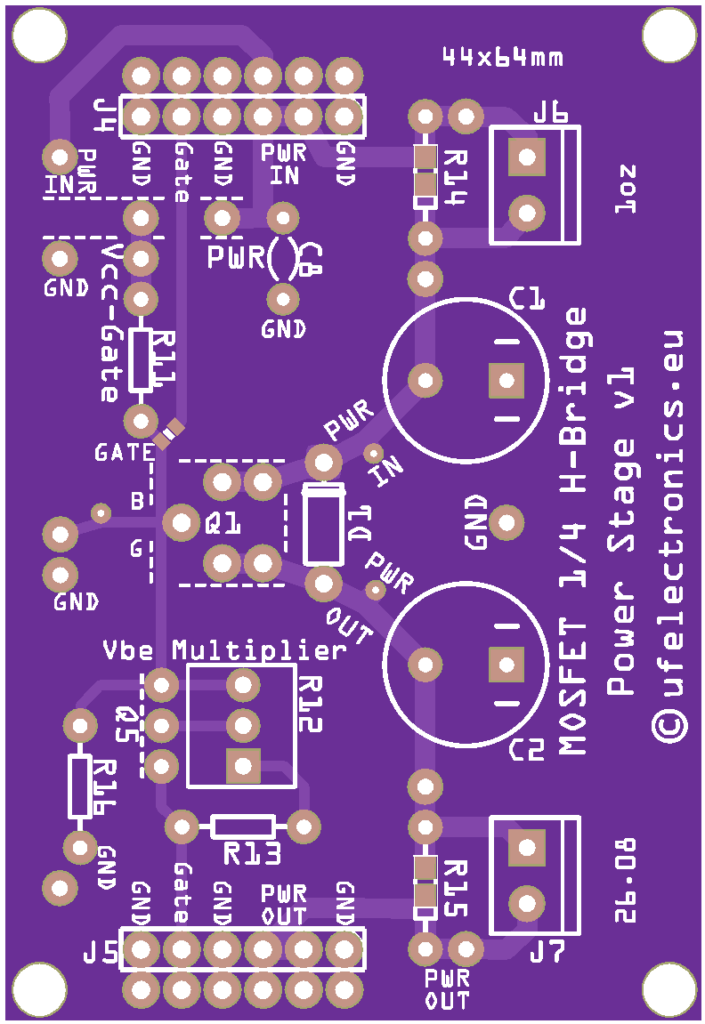
1/4 H-Bridge Power Stage v1 (set of two PCBs)
7,95 € -
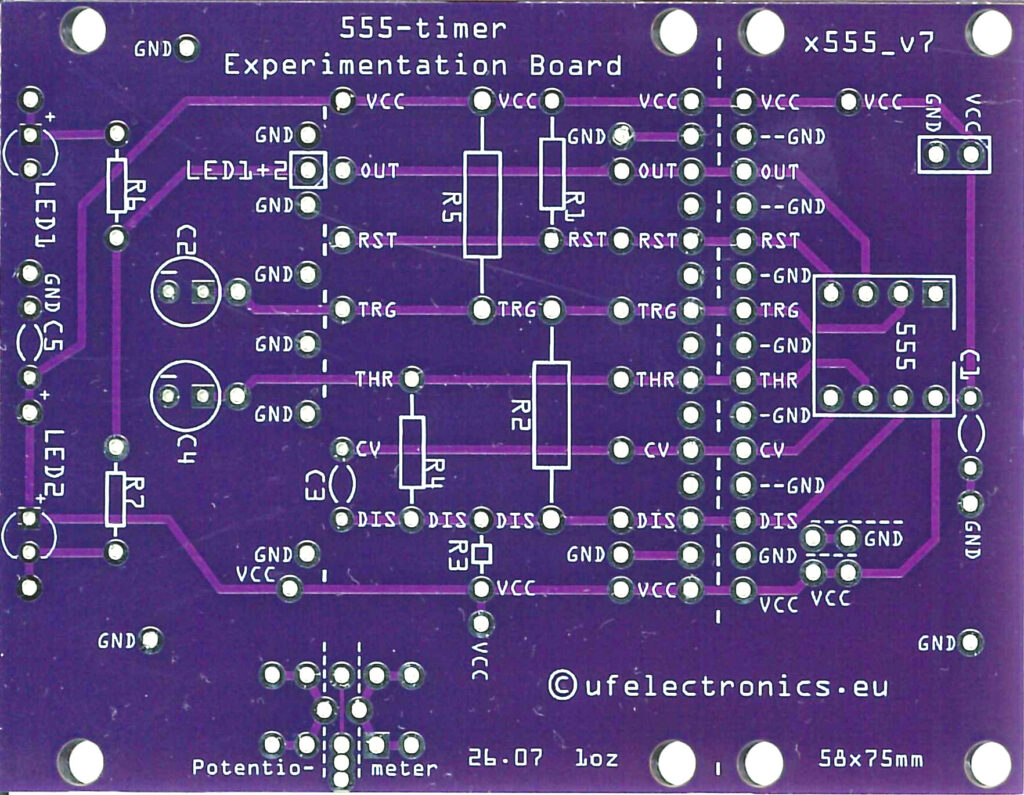
555 Experimentation Board v7
7,95 € -
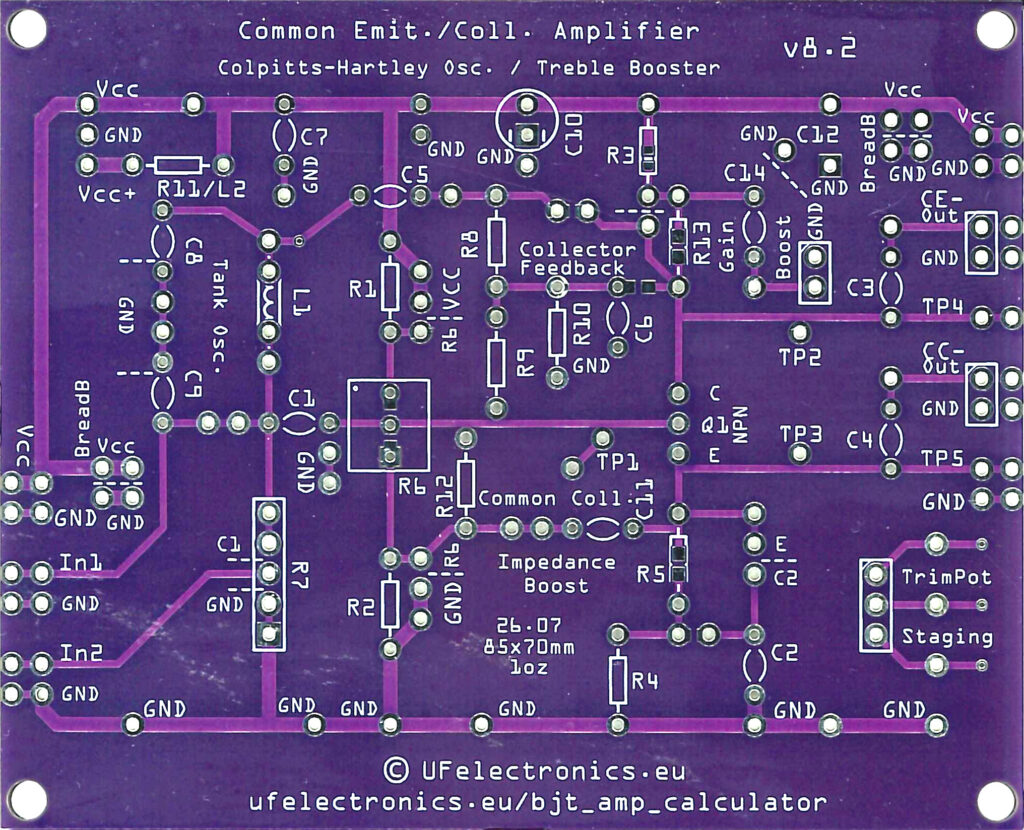
BJT Analog Transistor Experimentation Board v8.2.1
7,95 € -
BJT Transistor Multivibrator Experimentation Board v2
Original price was: 7,95 €.3,95 €Current price is: 3,95 €. -
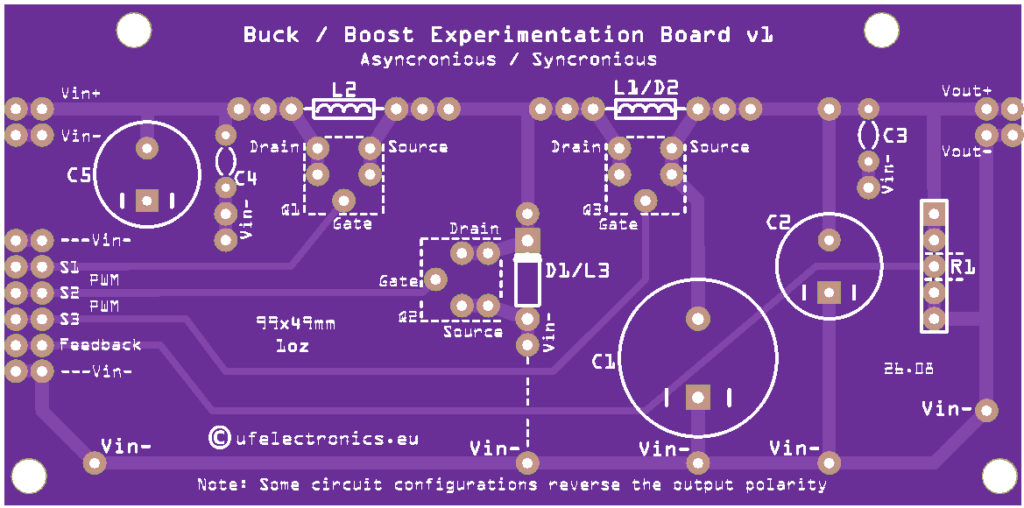
Buck / Boost Experimentation Board v1
7,95 € -
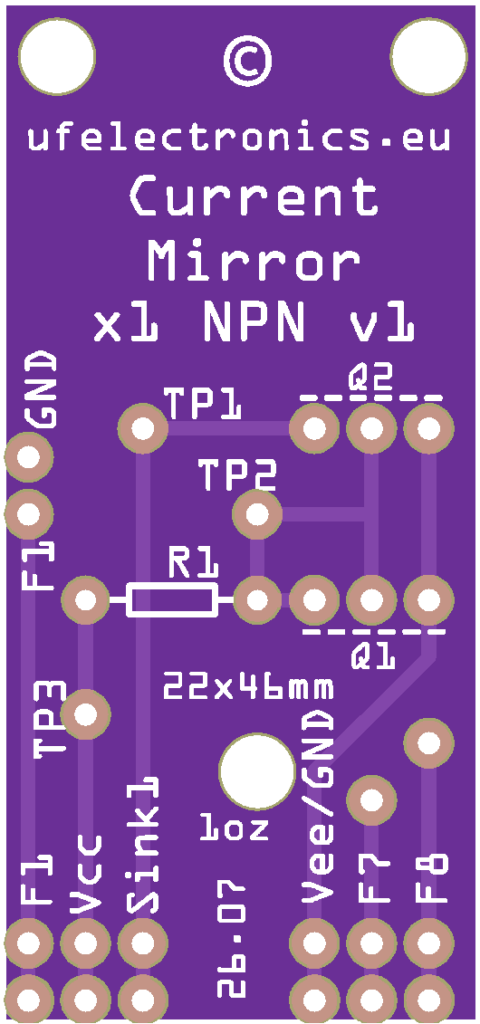
Current Sink Mirror Experimentation Board v1
0,95 € -
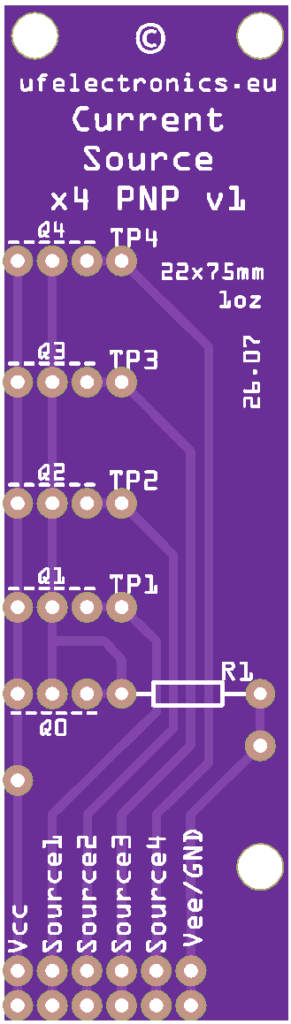
Current Source Mirror Experimentation Board v1
1,95 € -
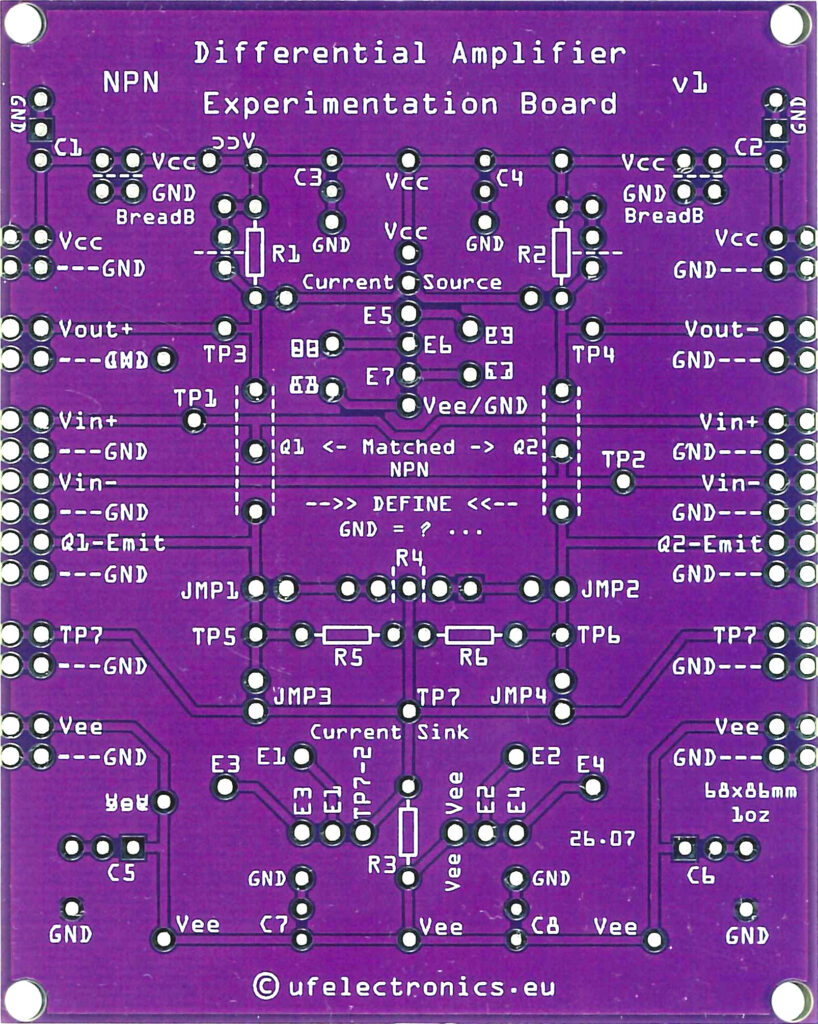
Differential Amplifier Experimentation Board v1
Original price was: 7,95 €.3,95 €Current price is: 3,95 €. -
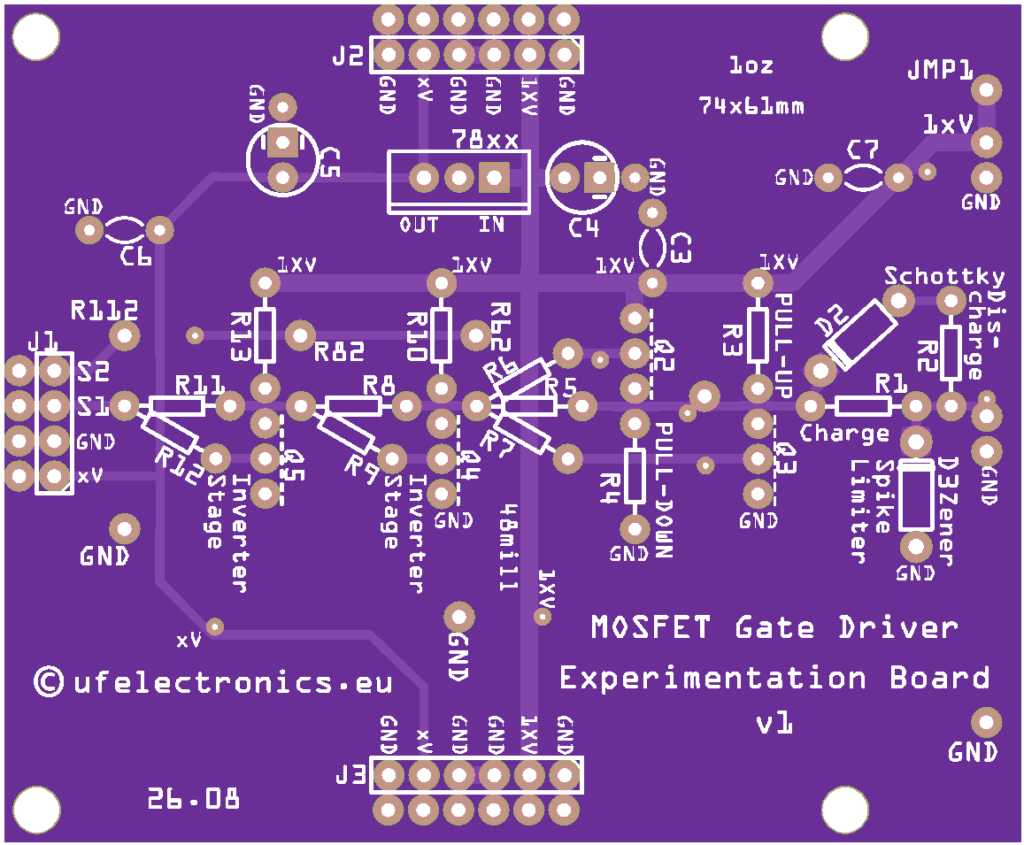
MOSFET Gate Driver Experimentation Board v1 (set of two PCBs)
14,95 €
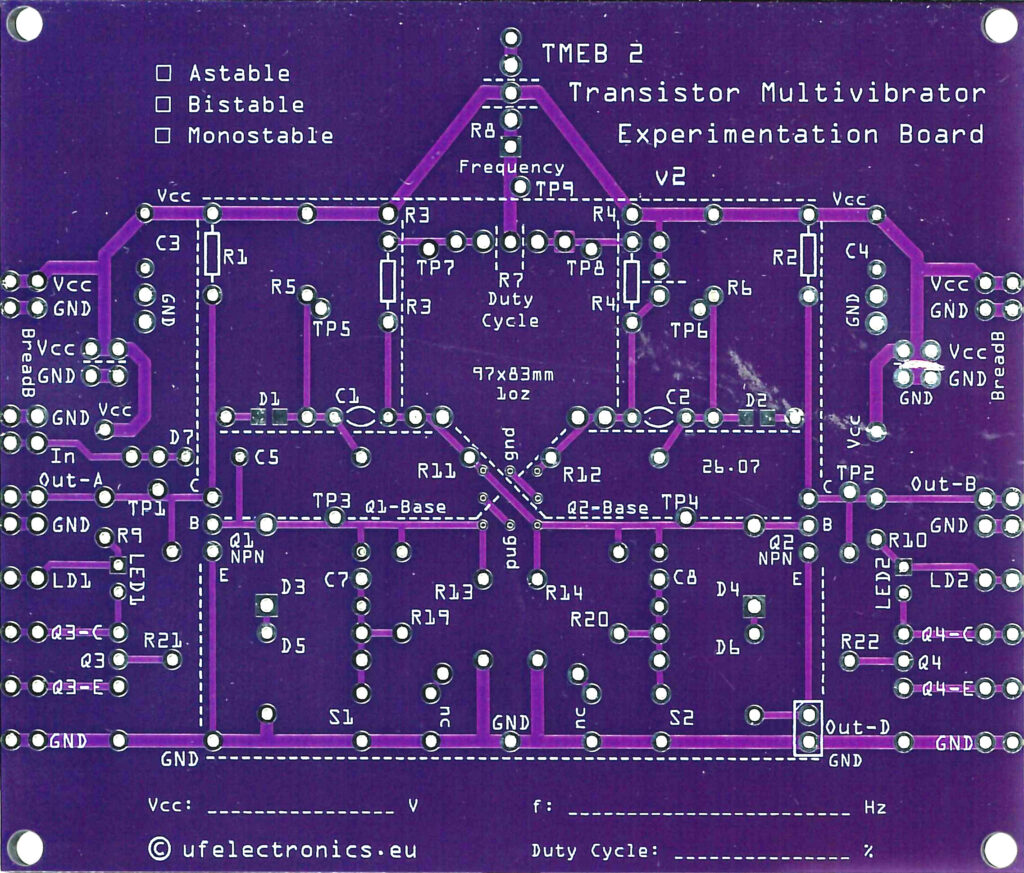
Experimentation in Practice
The boards are made to be used.
Build a circuit.
Change it.
Connect your instruments.
Measure what happens.
Try something different.
Learn from the result.
That’s experimentation.