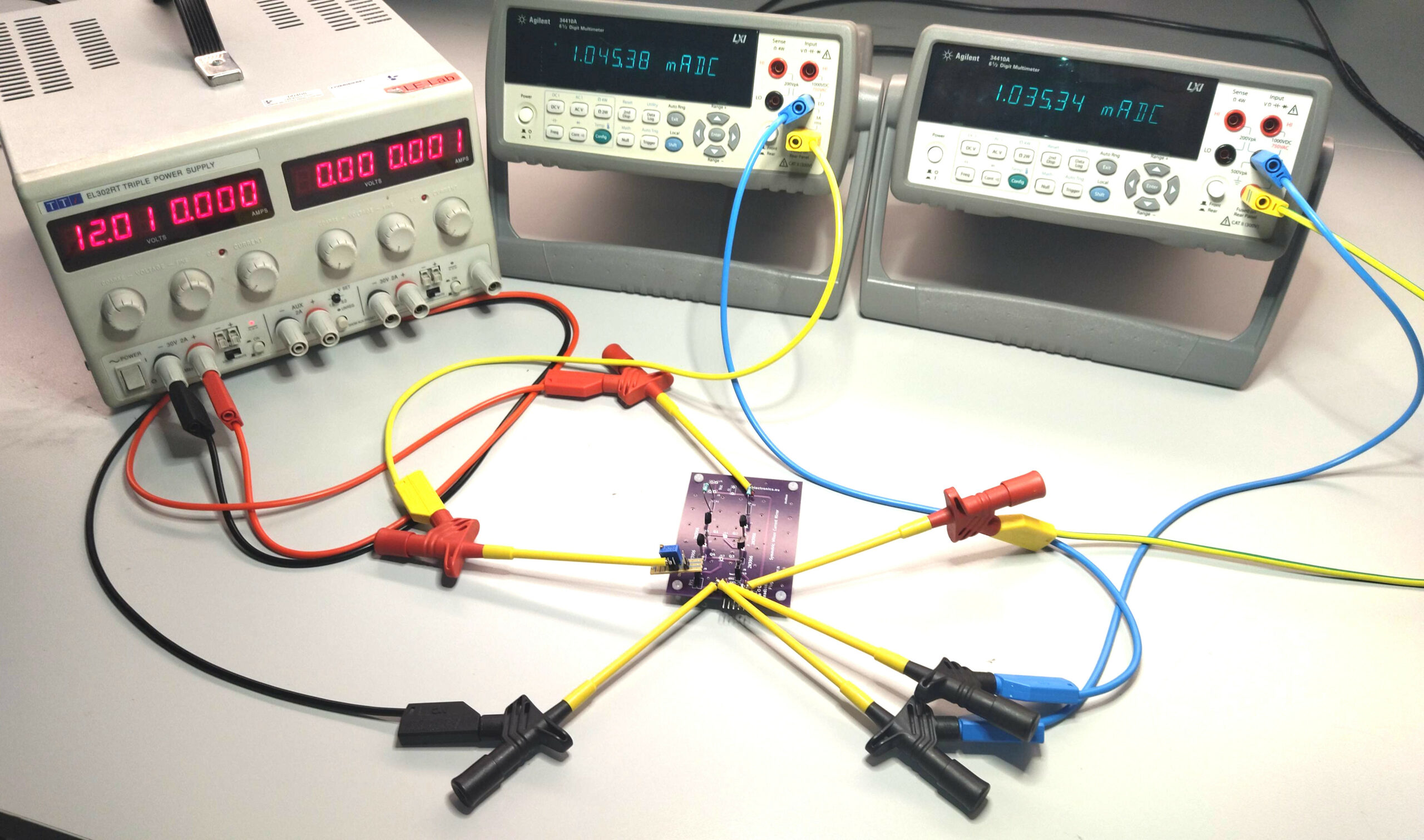
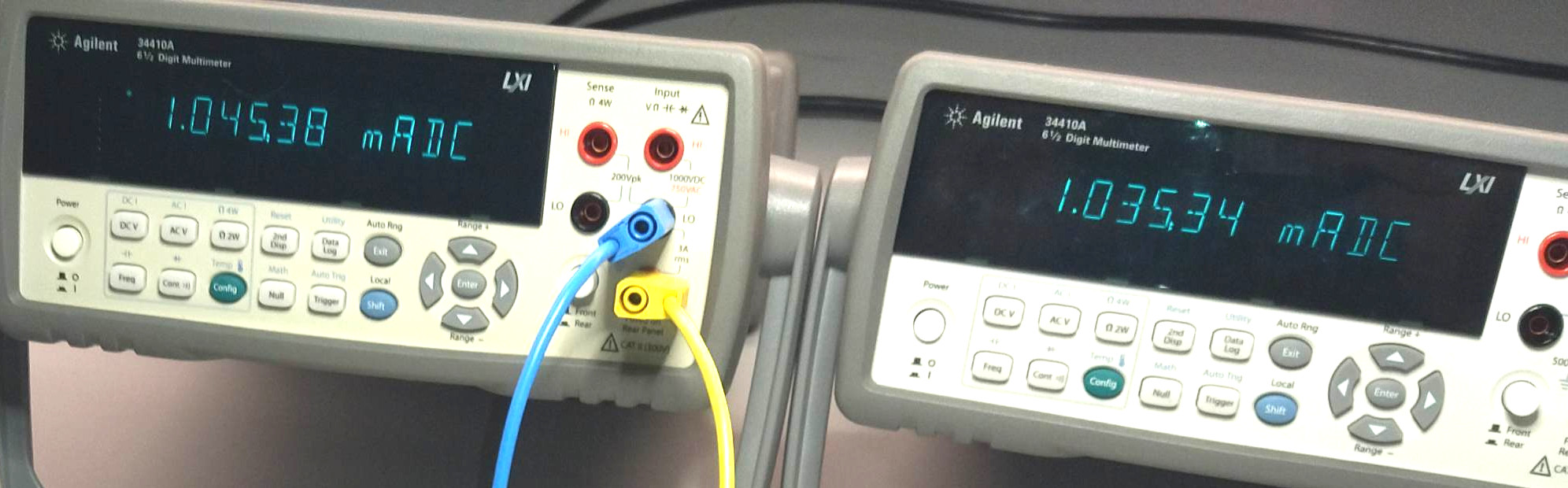
– Only 11 µA difference between the reference current and the output current –
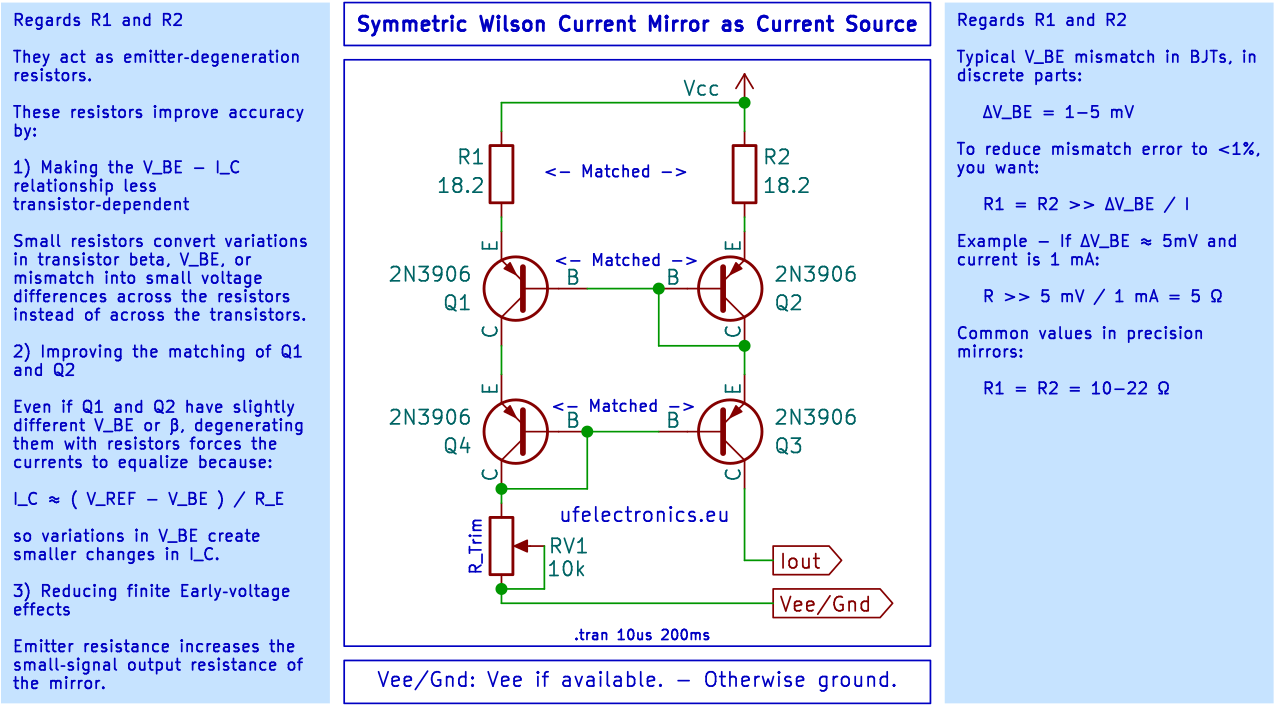
– that is what I measured with a symmetric Wilson current source mirror built from ordinary, unmatched 2N3906 PNP transistors.
For the experiment, I used:
* 4 randomly selected 2N3906 PNP transistors
* 2 randomly selected 18 Ω resistors
* Both resistors measured 18.1 Ω
* No transistor matching
* No measurement or selection of V_BE or transistor gain
* No thermal coupling between the transistors
The current through each side was approximately 1 mA.
The difference was just 11 µA, corresponding to:
11 µA / 1 mA × 100 = 1.1 %
That is a surprisingly good result considering that the transistors were simply picked from the parts drawer.
But there is an interesting catch:
Because the transistors are physically separate, the circuit is sensitive to temperature differences between them. As an experiment, I held one of the upper transistors with my bare fingers.
-> The current difference changed significantly, by considerably more than the original 11 µA.
So this isn’t about proving that discrete transistors are somehow better than transistors integrated into an IC.
It is simply an experiment to see how good a result can be achieved from ordinary, inexpensive, unmatched discrete transistors when they are used in a well-designed circuit.
And apparently, the answer is: Surprisingly good.
There are several more experiments I’d like to try:
* How does the output current change as the voltage over the load changes?
* How sensitive is the current to temperature differences between the transistors?
* And how much better is the Wilson mirror compared with a simple two-transistor current mirror?
Symmetric Wilson Current Mirror Experimentation Board